
i-DCA
Robot-guided application of self-adhesive die-cuts — precise, fully automated, and continuously monitored.
What is the i-DCA?
The i-DCA applies self-adhesive die-cuts directly to the part, with the robot carrying the material roll along. Body hole covering is the primary application, but battery-housing sealing is possible too.
- Fully integrated robotic tool with no external control cabinet required
- Robot carries the material roll for true direct application
- Handles a broad range of die-cut shapes and geometries
- Suitable for new lines and retrofitting existing ones
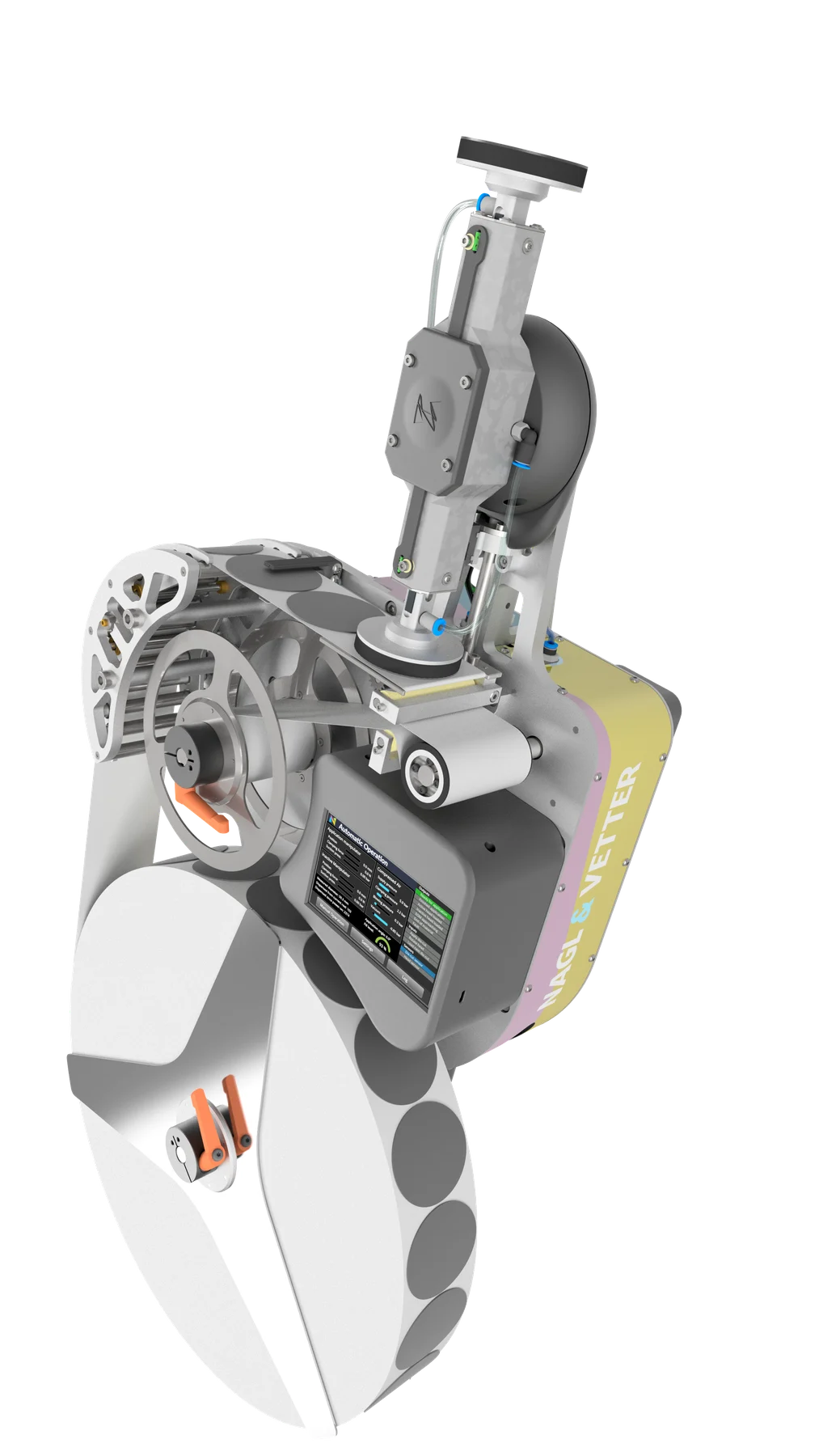
FLEXIBLE POSITIONINGProcess monitoringOPTIMIZED
MATERIAL SUPPLY
How Is the Application Process Monitored?
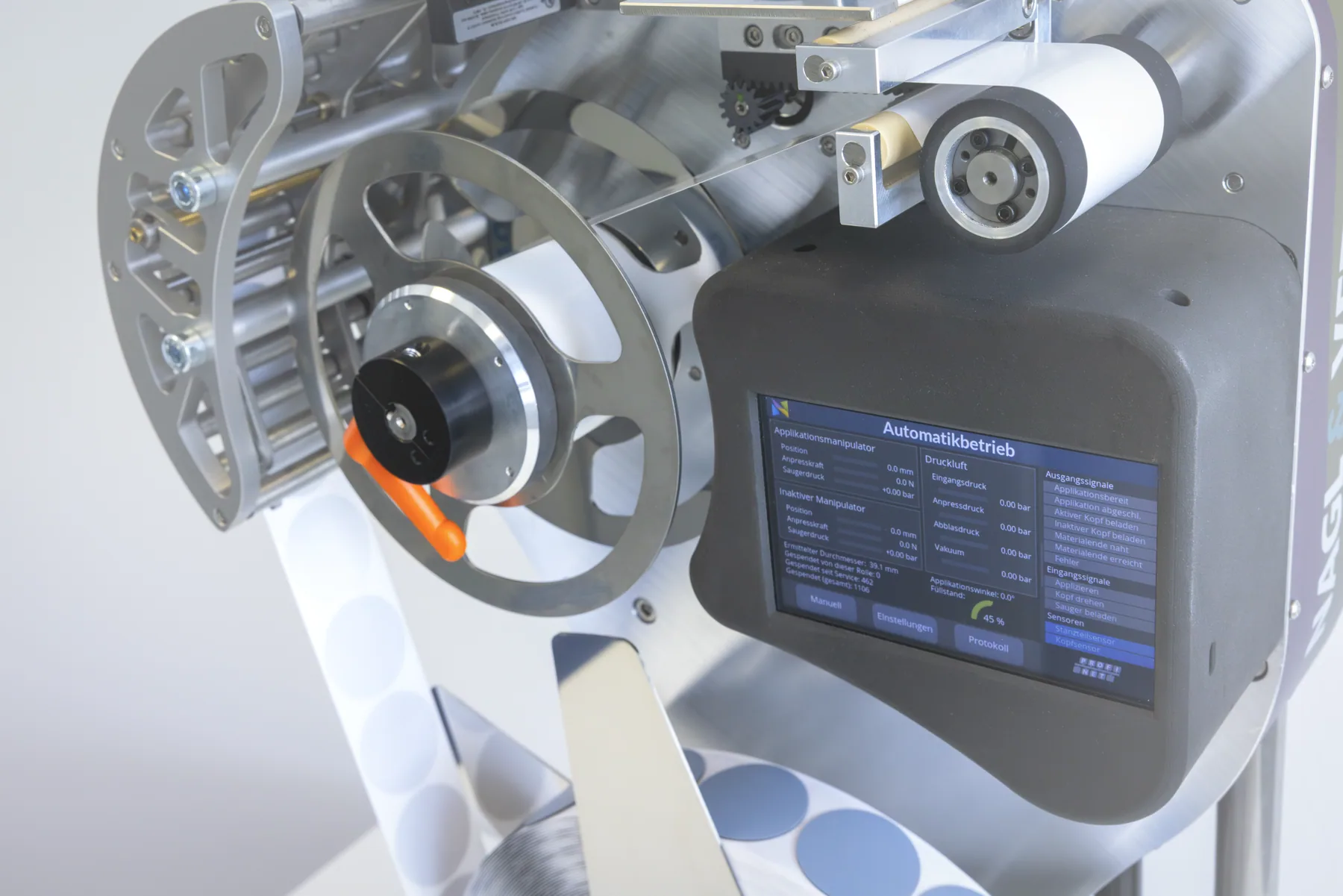
Not just automation. Every single application is monitored. The i-DCA continuously checks the relevant process parameters for each part it applies, so you can be certain every part was actually sealed.
Input pressure and secondary pressure zones are monitored continuously; the suction-pressure measurement detects lost die-cuts and confirms successful application via the target blow-off pressure.
How Is High System Availability Achieved?
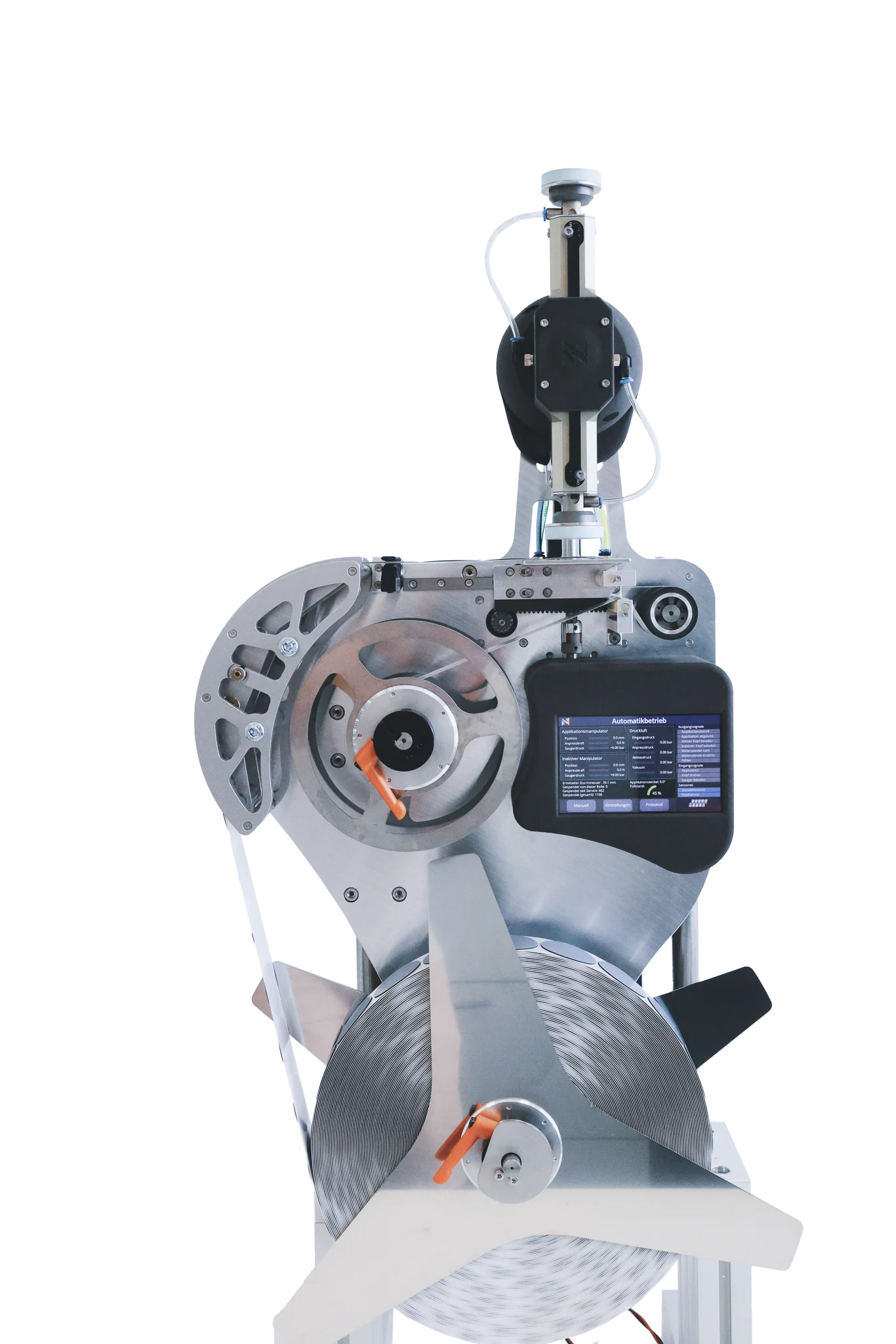
A two-unit concept keeps the line running: while one i-DCA tool is producing, the second can be prepared or reloaded in parallel.
- Two-unit concept — one tool produces while the other is reloaded
- Automatic tool change at the robot
- Defined fallback behavior and quick tool swap in case of a fault
- Tool can be fully tested and serviced away from the robot
How Fast Can Parts Be Applied?
Five servo motors, two position-measurement systems, and eight pressure-measurement channels enable a typical cycle time of approx. 1.5 s per part, even during intensive multi-shift operation.
Real application footage of the i-DCA in continuous operation.
Which Materials Can Be Processed?
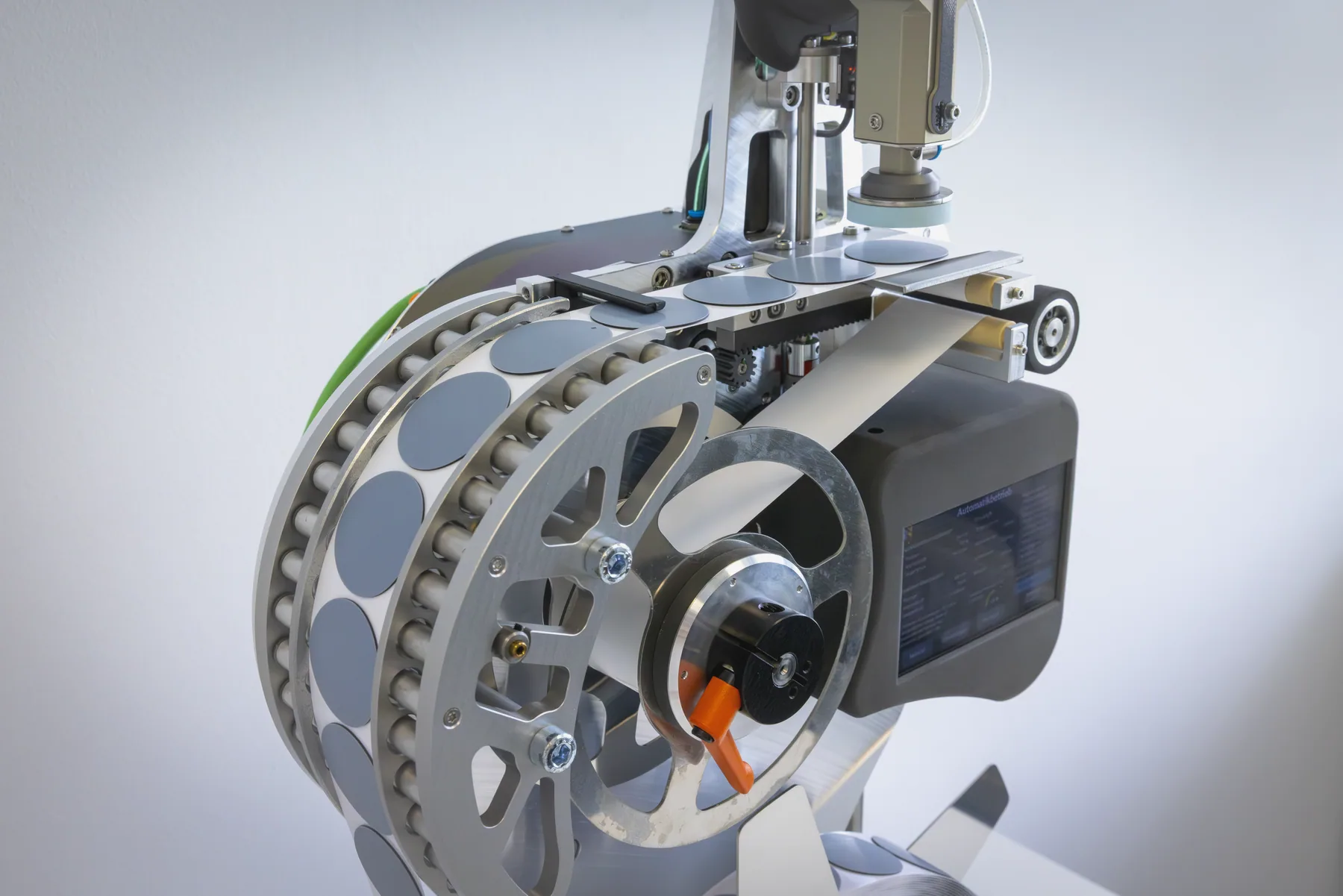
Material freedom is a key advantage: the i-DCA handles self-adhesive patches and die-cuts from a wide range of manufacturers. Suitability is verified case by case for your specific application and material.
- Compatible with self-adhesive patches and die-cuts from various manufacturers
- Contactless material feed, suitable for single- and double-sided adhesives, including particularly stiff die-cuts
- Adjustable die-cut diameter and liner width
How Is the i-DCA Integrated Into the Line?
Compact weight, dimensions, and a defined robot interface keep integration space-efficient. All settings can be loaded centrally from the higher-level control via the fieldbus interface.
Technical Specifications
| Supply voltage | 24 V DC / 4 A, integrated current limiting |
| Compressed-air supply | oil-free, dry, 4–7 bar, max. 30 l/min |
| Dimensions | 420 × 860 × 220 mm (W × H × D) |
| Weight | 18 kg |
| Cycle time | typically approx. 1.5 s |
| Die-cut diameter | adjustable up to 65 mm |
| Liner width | adjustable from 30 to 65 mm |
| User interface | 5-inch LCD, PCAP touch, glass surface |
| Fieldbus interface | PROFINET / EtherNet-IP |
| Operating temperature range | 10–40 °C |
i-DCA systems in automotive production worldwide
Proven in Automated Automotive Lines
More than 150 i-DCA systems are in use worldwide, applying self-adhesive die-cuts reliably in automated series production.
Questions About Integrating the i-DCA?
Most integration questions can be resolved quickly in a personal conversation.
Get in Touch